Cause-first evaluation
Crack direction, width, movement, moisture, and surrounding conditions guide the recommendation.
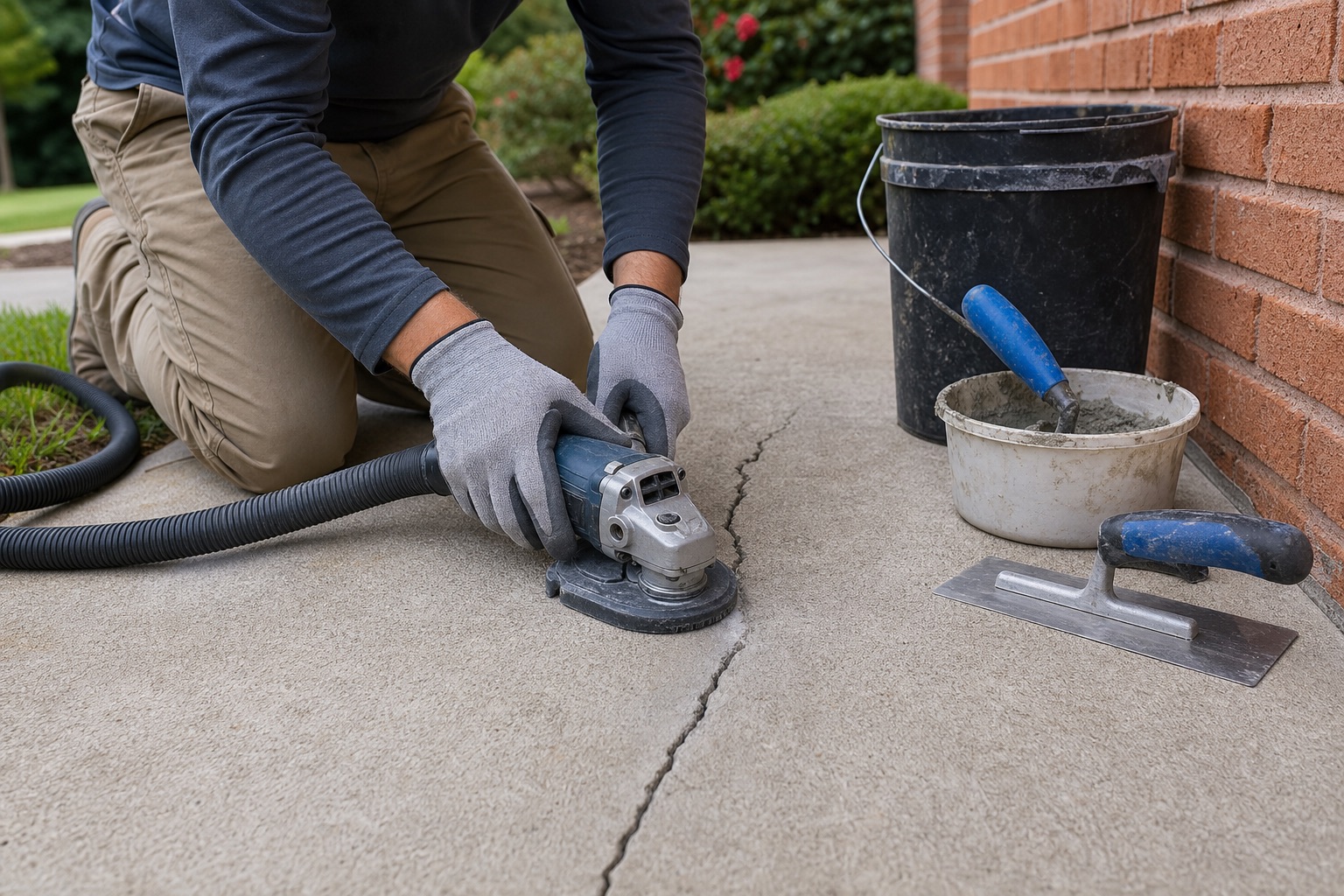
Cracks and surface damage do not all mean the same thing. HD Concrete evaluates the pattern, movement, moisture, and surrounding slab before recommending a compatible repair or replacement.
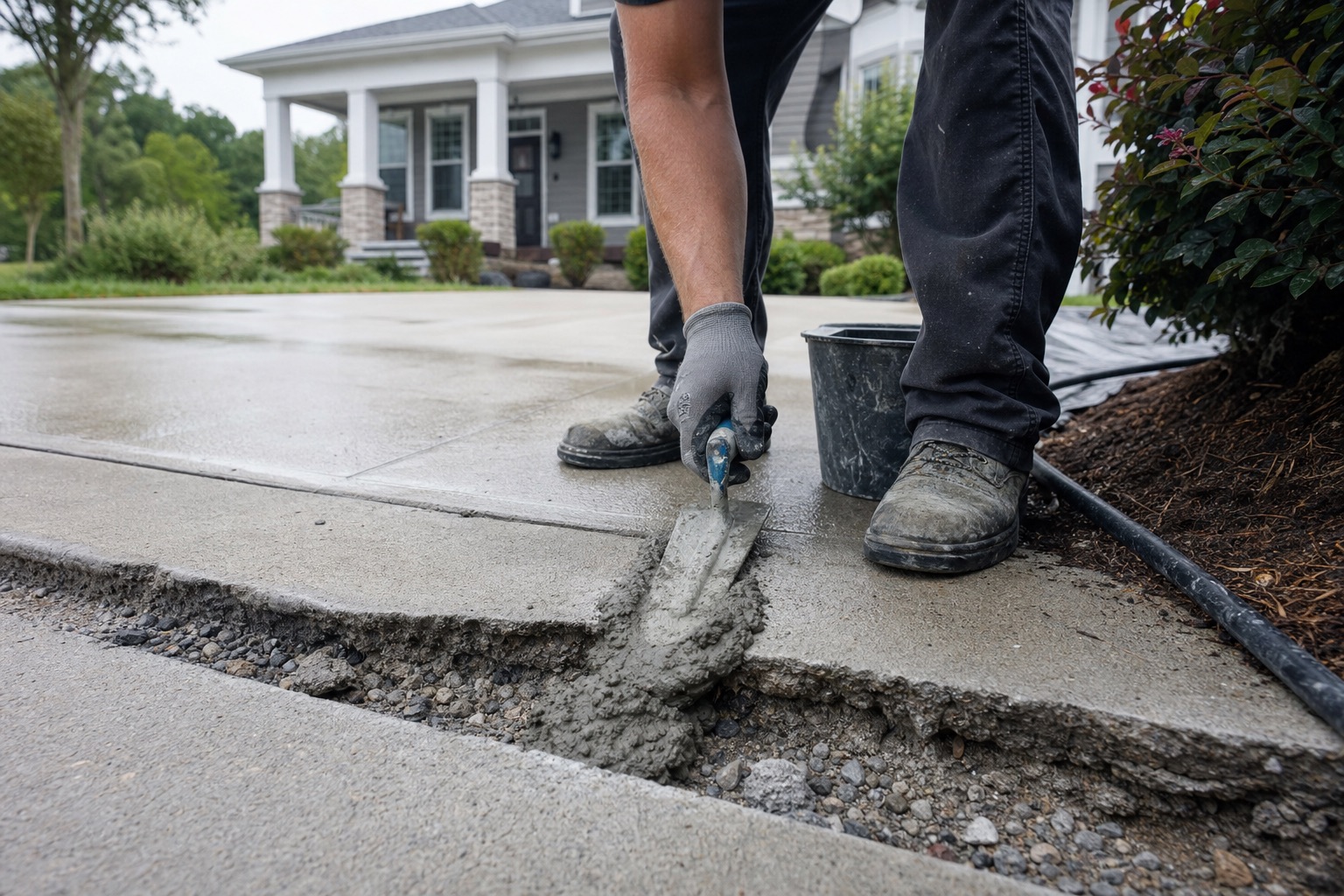
Concrete repairs can address open joints, nonstructural cracks, spalled surfaces, chipped edges, isolated damage, and selected failed sections. The goal may be to reduce water entry, improve an edge, remove a trip point, or extend the useful life of otherwise serviceable concrete—not to disguise active movement.
Greenville's wet seasons, clay soils, roots, downspouts, and freeze-thaw swings can all influence cracks and settlement. A surface repair cannot stabilize a moving base or fix structural distress. When the cause sits below the slab, the recommendation may include drainage correction, removal, or specialist review.
Crack direction, width, movement, moisture, and surrounding conditions guide the recommendation.
Rigid mortar, flexible sealant, resurfacing products, and replacement concrete serve different conditions.
Repairs may remain visible, especially beside older, weathered, or stained concrete.
Every property is different. The final estimate identifies the exact preparation, dimensions, finish, materials, access, cleanup, assumptions, and exclusions for your project.
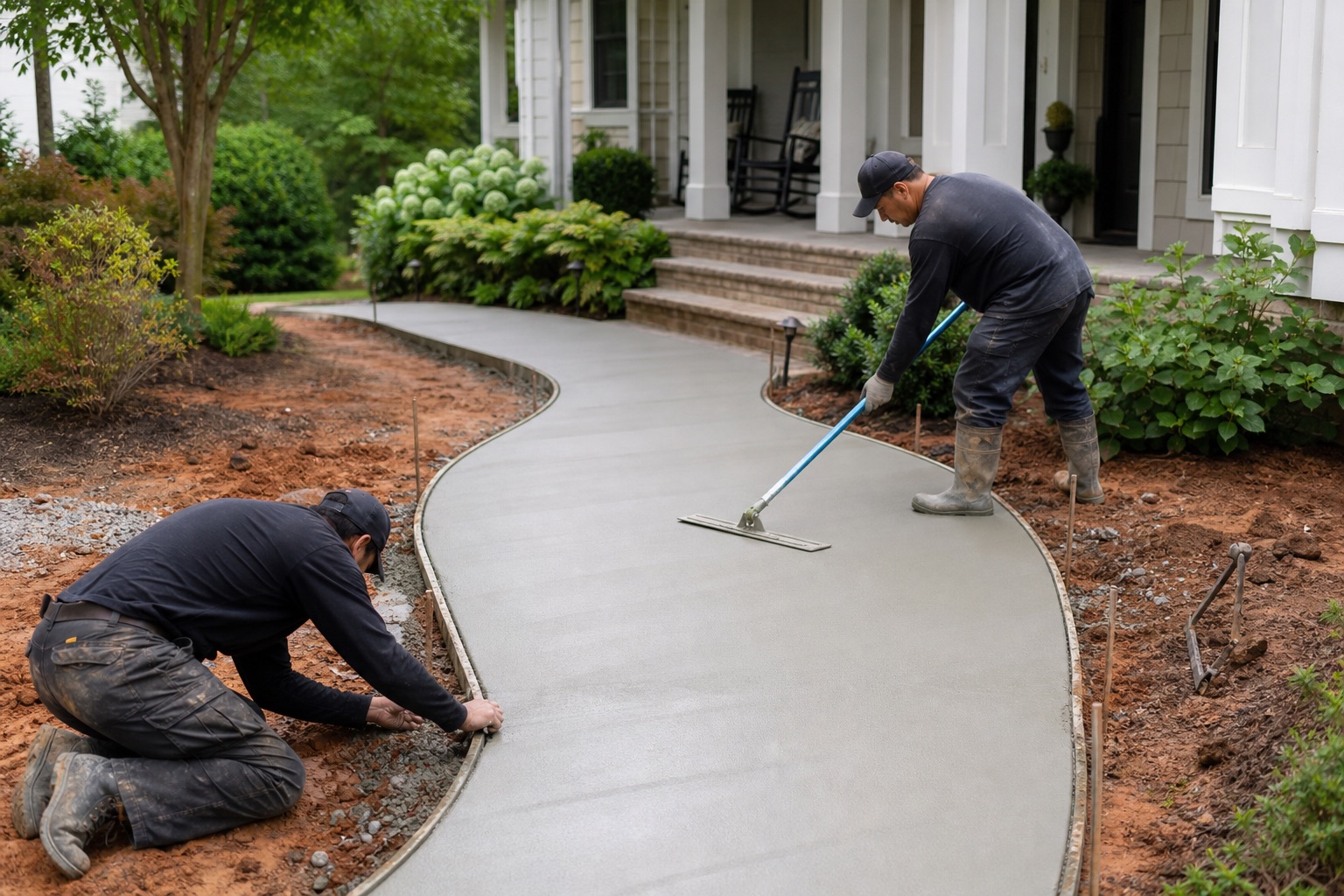
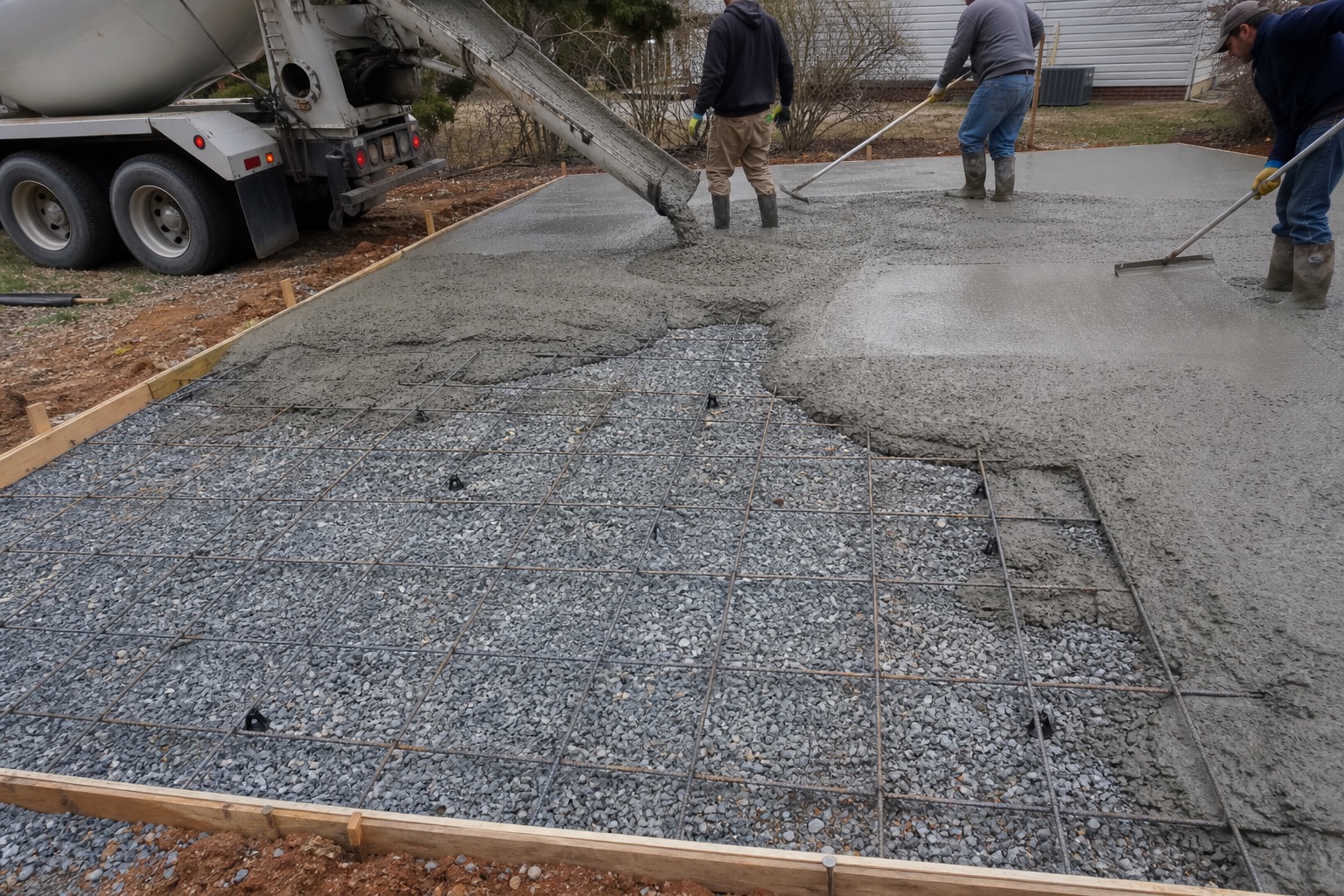
Concrete placement moves quickly. The scope, site, base, forms, access, weather, and crew sequence need to be ready first.
We review where the concrete failed, whether it appears active, and what water, load, roots, or base conditions may be contributing.
Loose material and contamination are removed so the selected repair can bond to a properly prepared area.
Material is installed to the agreed scope, then cure, appearance, and future monitoring expectations are reviewed.
Not sure whether this is the right concrete service? Send a photo, dimensions, the project address, and how the surface needs to be used.
Ask Dakota about your project →These questions cover the choices, limitations, and site conditions that commonly affect this concrete service.
No repair can guarantee that active movement will stop. Flexible materials may accommodate limited movement, while rigid repairs are better for stable conditions. The cause matters.
That depends on width, movement, location, moisture exposure, and whether the damage is in a joint or within the slab. We recommend the material after inspection.
Some localized spalls can be repaired after all unsound material is removed. Widespread scaling, contamination, corrosion, or a weak slab may require a different solution.
Replacement may be better when damage is widespread, panels are moving, the base has failed, reinforcing steel is involved, or repair cost approaches the value of a new section.
Share photos and project details. Dakota will confirm service-area fit and the next estimating step.